

Introduction
Child custody is one of the most sensitive issues that arises in Sharia courts after a divorce. Many children find themselves caught in conflicts between their parents at a time when they need love, stability, and a sense of security more than ever.
Instead of focusing on their children’s best interests and emotional well-being, some parents turn custody disputes, visitation arrangements, and overnight stays into battles of conflict and revenge. Each parent becomes focused on proving a point or preventing the other from spending time with the children.
But the most important questions are these: Do parents truly understand the psychological impact these conflicts can have on their children? Are marital disagreements worth making children pay the price with their childhood and emotional stability?
Child Custody After Divorce: The Child’s Best Interests Come First
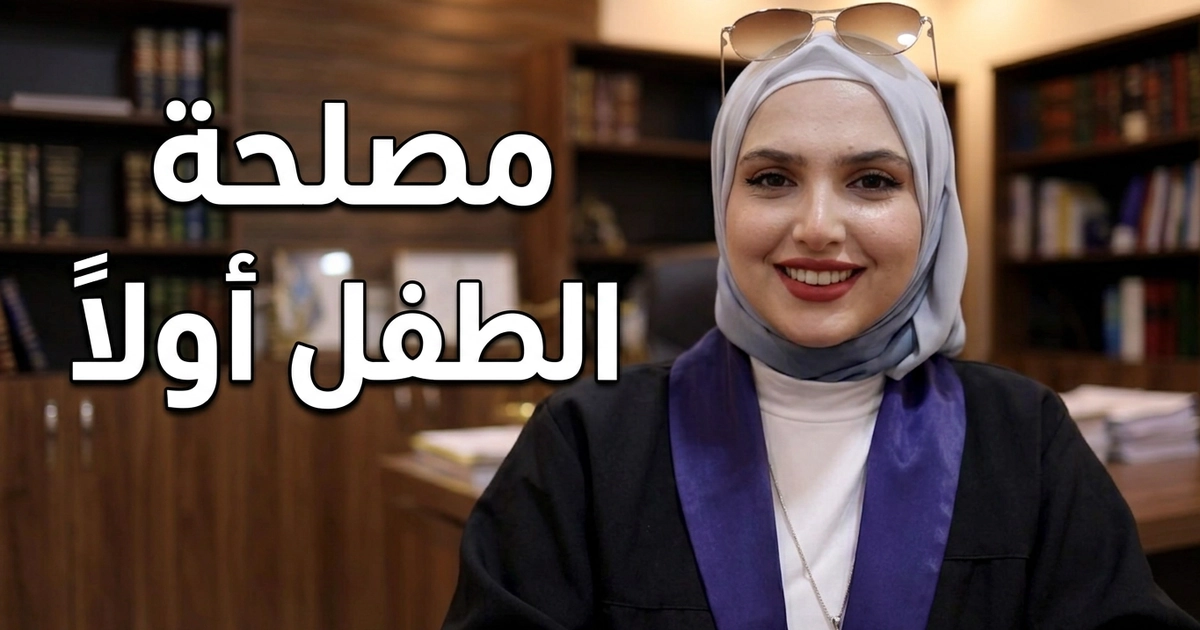
Child custody disputes after separation should never be reduced to a struggle between a mother and a father or an attempt by one parent to defeat the other. The priority must always be the child’s best interests, emotional needs, family circumstances, and sense of security and stability.
Children do not see custody as merely a legal matter. They experience it as a fundamental part of their daily lives. They need care, attention, and the reassurance that they are loved by both parents, even when their parents no longer live under the same roof.
For this reason, both parents must understand that the end of their marriage does not mean the end of their responsibilities toward their children. A child’s well-being must always take priority over personal disagreements and the negative emotions that may follow a separation.
Preventing a Father or Mother From Seeing Their Children Can Increase Their Suffering
One of the problems that may arise after divorce is the use of visitation rights and overnight stays as tools to pressure the other parent.
In some cases, a parent may attempt to limit the children’s contact with the other parent because of personal disagreements, without a legitimate reason related to the child’s safety or best interests.
It is important to emphasize that visitation arrangements and overnight stays should prioritize the child’s well-being while complying with applicable laws and court orders. Any concerns regarding a child’s safety must be taken seriously and addressed through the appropriate authorities.
Children are not tools for revenge, nor are they bargaining chips in disputes between parents.
They are not responsible for their parents’ decision to separate, and they should never have to bear the consequences of conflicts they did not choose.
Turning Children Against Their Father or Mother Can Cause Serious Emotional Harm
One of the most harmful behaviors a parent can engage in is deliberately damaging the other parent’s image in the child’s eyes. This may involve blaming the other parent for the divorce, making repeated negative comments, or encouraging the child to view one parent with fear, resentment, or hatred.
When children repeatedly hear that their father is a bad person, that their mother does not love them, or that one parent is entirely responsible for everything that happened, they may feel forced to choose one parent over the other.
This emotional conflict can make children feel guilty simply for expressing love for one parent. They may even hide their true feelings because they are afraid of upsetting the parent they live with.
For this reason, parents should avoid using their children to deliver messages, exchange accusations, or take sides in their disputes. Neither parent should pressure a child to reject the other or demonstrate loyalty by choosing one side.
The relationship between a child and their parents should never become a battleground for settling personal scores. It is a human bond that deserves protection and respect, provided that the relationship is safe and serves the child’s best interests.
How Do Parental Conflicts Affect Children After Divorce?
Ongoing conflict between parents can increase a child’s feelings of anxiety, sadness, and instability, especially when the child is repeatedly exposed to accusations or pressured to take sides.
Constant exposure to parental disputes may also affect a child’s sense of security and ability to develop healthy relationships with others.
Some children may show signs of emotional distress through withdrawal, behavioral changes, difficulties at school, or fears about the future. The effects vary depending on the child’s age, circumstances, the nature of the conflict, and the support available to them.
Protecting children’s emotional well-being after divorce is just as important as meeting their financial, educational, and everyday needs. Children must be given a safe space to express their feelings without blame, pressure, or fear.
A Message to Every Father and Mother: Don’t Make Your Children Pay the Price
Dear father, dear mother, a marriage may end for many reasons. You may disagree, hold different views, or face serious difficulties in your relationship. But your children are not to blame for what happened.
Do not make your children feel that loving one parent means betraying the other. Do not ask them to take sides or carry the burden of resolving problems they did not create.
Allow your child to love their mother without fearing their father’s anger, and to love their father without feeling guilty toward their mother, as long as the relationship with each parent is safe and consistent with the child’s best interests.
If disagreements arise over custody, visitation, or overnight stays, resolve them through dialogue and appropriate legal channels rather than placing emotional pressure on your children or using them as instruments of revenge.
A child does not need a mother who defeats the father or a father who defeats the mother. A child needs two parents who put their well-being and emotional security first.
Conclusion: Successful Parenting Is Not Measured by Who Wins the Case
Ultimately, child custody disputes after divorce should never become battles in which the goal is to prove who is stronger or who can cause the other parent the most harm.
Divorce may end a marriage, but it does not end a mother’s or father’s responsibility toward their children. Nor does it remove their duty to protect their children from the harmful effects of ongoing conflict.
Successful parenting after divorce is not measured by who wins the custody case or who gains the upper hand in court. It is measured by the parents’ ability to provide a safe and stable environment that protects their children’s dignity and emotional needs.
Do not steal your children’s childhood because of adult conflicts. Do not make them pay the price for disagreements they never chose. Children need love and security, not endless battles.