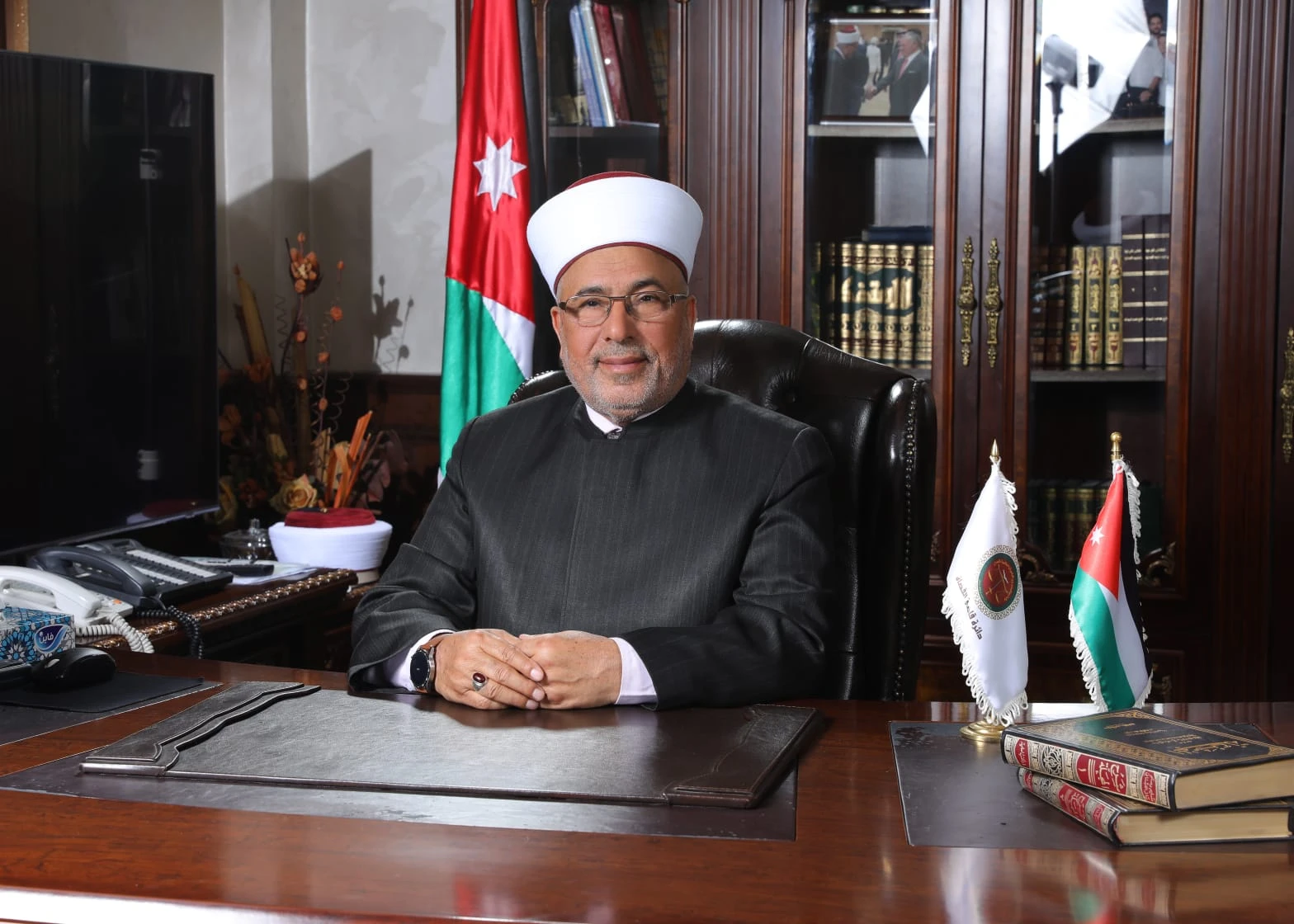
His Eminence the Chief Islamic Justice, Sheikh Abdul Hafiz Nahar Al-Rabatah, affirmed that Jordan’s path to independence was founded on the principles of justice, the rule of law, and the establishment of national institutions, emphasizing that the strength and stability of nations are closely tied to their ability to protect human dignity and strengthen public trust in state institutions.
This came in an article titled “Independence and Justice: The Journey of the Hashemite State,” in which His Eminence reviewed the development of the Jordanian state since the establishment of the Emirate of Transjordan in 1921 under the leadership of its founder, King Abdullah I bin Al Hussein, may he rest in peace, leading to the construction of a modern state based on law, justice, and partnership between leadership and people.
Building the Modern Jordanian State
The article noted that Jordan, despite the challenges and regional transformations it has witnessed, has succeeded in establishing a national model grounded in wisdom, moderation, and the preservation of human dignity, contributing to the maintenance of social cohesion and national stability over the decades.
His Eminence explained that May 25, 1946 marked the beginning of Jordan’s journey toward building an institutional state, where law serves as the reference, justice as the guiding principle, and the individual as the focus of development and stability.
Justice as the Foundation of Stability
The article emphasized that justice in Jordan has never been confined to legal procedures alone, but rather represents an integrated system aimed at ensuring public safety, protecting rights, and fostering reassurance and social cohesion. It stressed that the strength of the state begins with the strength of its judicial and ethical framework.
It also highlighted the role of the Department of the Chief Islamic Justice in consolidating Sharia-based justice, protecting families, caring for minors, and safeguarding and developing orphan funds, as an essential pillar of Jordan’s social and national stability system.
Development of the Sharia Judiciary and Digital Services
The article addressed the institutional development witnessed by the Department of the Chief Islamic Justice in recent years, including the modernization of Sharia court services, the development of legislation and judicial procedures, and the enhancement of mediation and family reconciliation services aimed at reducing disputes and strengthening family and social stability.
His Eminence also pointed to the department’s commitment to managing orphan and minor funds in accordance with the highest standards of responsibility and integrity, reflecting its humanitarian and ethical mission.
He further affirmed that Jordan, under the leadership of His Majesty King Abdullah II Ibn Al Hussein, has continued its path of political, administrative, and economic modernization, alongside efforts to develop the judiciary and enhance the efficiency of national institutions.
He explained that the Department of the Chief Islamic Justice has expanded its digital services, simplified procedures, and improved judicial and administrative performance, thereby strengthening public confidence in judicial institutions and reinforcing the concept of efficient justice.
Independence as an Ongoing Responsibility
The article recalled the significant national role played by His Majesty King Hussein bin Talal, may he rest in peace, in strengthening national unity, stability, and state institutions, alongside Jordan’s continued historical role in the Hashemite Custodianship over Islamic and Christian holy sites in Jerusalem.
His Eminence concluded by emphasizing that independence represents an ongoing national responsibility that requires dedication and continuous effort to safeguard the nation’s achievements and reinforce the values of justice and fairness. He prayed that God protect Jordan, its leadership and people, and grant it lasting security and stability.
Source
- 24/05/2026 — الاستقلال والعدالة.. مسيرة الدولة الهاشمية
الاستقلال والعدالة.. مسيرة الدولة الهاشمية