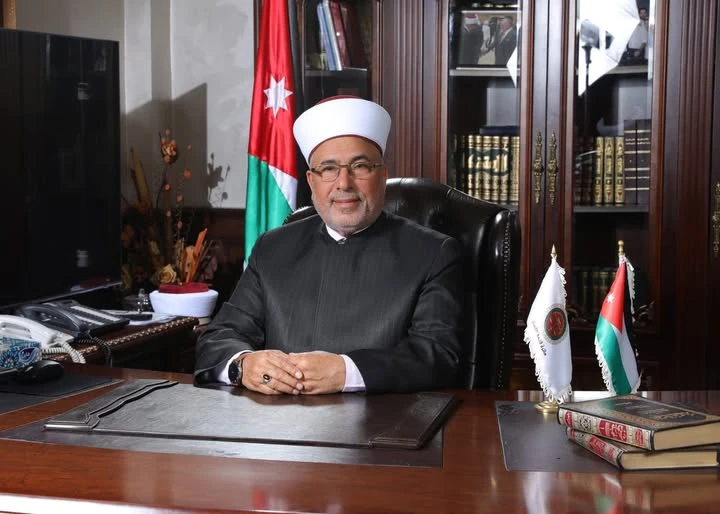
An Analytical Reading of the Article by Grand Qadi Sheikh Abdul Hafez Nahar Al-Rabtah
As the Islamic New Year begins, Muslims around the world renew their reflection on the memory of the Prophetic Migration (Hijrah), a landmark event that was far more than a geographical journey from Makkah to Madinah. It was a historic transformation that laid the foundations of a state, shaped a comprehensive civilizational model, and established principles for building individuals, communities, and nations.
In this context, Grand Qadi Sheikh Abdul Hafez Nahar Al-Rabtah presents a profound intellectual perspective on the Hijrah, moving beyond historical narration to explore its civilizational, ethical, and developmental dimensions as a continuous framework for reform, progress, and human advancement.
The Hijrah: From a Historical Event to a Civilizational Methodology
The article emphasizes that the Prophetic Migration marked a decisive turning point in the history of Islam. It represented the transition from a phase of persecution and vulnerability to one of institution-building, social organization, and state formation.
The author highlights how Prophet Muhammad (peace be upon him) offered an exceptional model that combined deep faith with strategic planning. The Hijrah demonstrated the balance between reliance on God and the responsible use of practical means, establishing a timeless principle for sustainable development and nation-building.
According to this vision, major achievements are not attained through wishful thinking but through determination, sound planning, perseverance, and unwavering commitment to a clear purpose.
Building the Individual: The Foundation of Every Renaissance
One of the article’s most significant messages is that genuine transformation begins within the individual. The Hijrah was not merely a physical relocation; it was a moral, intellectual, and spiritual transformation.
The author argues that meaningful societal reform cannot occur without first cultivating responsible, ethical, and productive individuals. Sustainable development begins with a system of values that guides behavior toward accountability, service, and excellence.
From this perspective, the Prophetic understanding of migration extends beyond place and time. It becomes a continuous moral journey away from wrongdoing and toward virtue, making the Hijrah a timeless model for personal and social renewal.
Crisis Management and the Creation of Hope
The article also examines one of the most important strategic lessons of the Hijrah: crises do not necessarily signify the end of a journey; they often mark the beginning of a new chapter of empowerment and success.
At the very moment when Muslims faced severe hardship and oppression in Makkah, the foundations were being laid for a new phase of stability, growth, and achievement in Madinah.
This lesson promotes a culture of constructive optimism, teaching that challenges can become opportunities and that adversity can serve as a gateway to progress when approached with resilience, wisdom, and faith.
Madinah: An Early Model of Good Governance
The article offers an insightful analysis of the state established in Madinah as an advanced model of social organization and good governance.
The emerging society was founded on principles of justice, equality, social solidarity, mutual respect, and shared responsibility. These principles were embodied in the Constitution of Madinah, widely regarded as one of the earliest constitutional documents in history.
This perspective highlights the legal and institutional significance of the Hijrah as a foundational moment in the development of a society governed by the rule of law, peaceful coexistence, and clearly defined rights and responsibilities.
The Hijrah and Contemporary Nation-Building
Rather than treating the Hijrah as a historical memory, the article presents it as a source of guidance for addressing modern challenges. Contemporary societies face complex intellectual, ethical, economic, and social pressures that require renewed commitment to enduring values.
The author calls for a modern application of the spirit of the Hijrah through transitions from extremism to moderation, from division to unity, from consumerism to productivity, and from criticism without action to meaningful participation in community development.
This interpretation presents the Hijrah as a framework for reshaping social consciousness and strengthening a culture of responsibility, citizenship, and constructive engagement.
Jordan and the Values of Moderation and Stability
The article further connects the values of the Hijrah to the modern Jordanian experience, emphasizing that moderation, balance, tolerance, and respect for the rule of law have been essential pillars of Jordan’s stability and development.
It argues that protecting families, safeguarding rights, promoting social responsibility, and strengthening national belonging represent practical extensions of the principles embodied in the Islamic message and demonstrated through the Prophetic Migration.
Conclusion
Grand Qadi Sheikh Abdul Hafez Nahar Al-Rabtah’s article offers a thoughtful and balanced interpretation of the Prophetic Migration, moving beyond its historical context to illuminate its civilizational, human, and legal significance.
Its central message is clear: the progress of nations is not determined solely by resources or material wealth. Rather, it is driven by values transformed into action, faith translated into responsibility, and vision converted into a sustainable civilizational project capable of building people and advancing societies.
For this reason, the Hijrah remains a timeless school of leadership, resilience, state-building, and ethical transformation—one that continues to inspire individuals and nations in their pursuit of stability, prosperity, and human flourishing.
Source
الهجرة النبوية.. حين تصنع القيم نهضة الأمم تاريخ : 2026/06/15